







When we think about vehicle maintenance, our minds naturally drift to engine oil changes, tyre pressure checks, and brake pad replacements.
However, tucked away along the fuel line is a critical component that plays a monumental role in keeping your engine running smoothly: the fuel filter.
Modern internal combustion engines are miracles of engineering, operating under immense pressure and tight tolerances.
This is particularly true for high-pressure common rail diesel engines and modern petrol direct-injection systems. To protect these sensitive mechanisms, clean fuel is non-negotiable.
Here is an in-depth exploration of fuel filters, how they protect your engine, the warning signs of failure, and why skipping a replacement can result in catastrophic financial consequences.
Anatomy of a Fuel Filter: How It Works
At its core, a fuel filter acts as a microscopic gatekeeper. Fuel stored in your vehicle’s tank is rarely perfectly clean.
Contaminants can enter the fuel system during manufacturing, transit, or whilst sitting in station underground storage tanks. Common pollutants include:
- Rust and scale: Flecks of corroded metal from older storage tanks or fuel lines.
- Dirt and dust: Environmental debris that finds its way into the tank during refuelling.
- Water condensation: Atmospheric moisture that forms inside the tank due to temperature fluctuations.
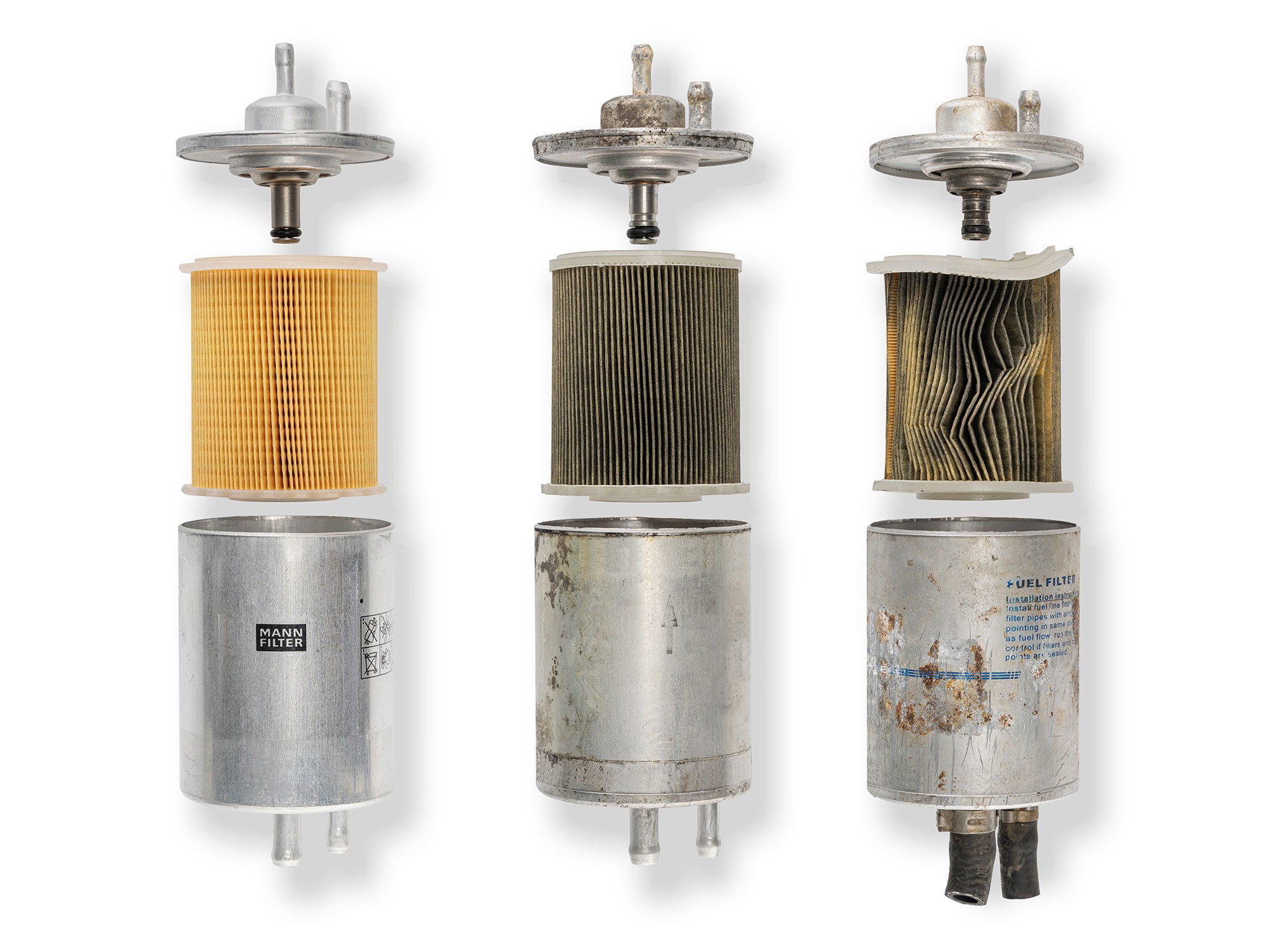
As fuel is drawn from the tank by the fuel pump, it passes through the filter before reaching the engine. The filter housing contains a pleated, porous material—often made from cellulose, synthetic fibres, or fiberglass—designed to trap particulates whilst letting the liquid pass through.
As seen in the cutaway diagram above, premium filters utilise a multilayer filter medium to capture finer particles sequentially, preventing premature clogging.
Furthermore, many modern diesel filters incorporate a specialised water chamber at the base alongside a water drain screw. Because water is denser than diesel, it settles at the bottom, allowing owners to drain off excess moisture before it reaches the injection system.
The Critical Differences: Petrol vs. Diesel Filtration
While the fundamental purpose remains identical, the execution varies dramatically between petrol and diesel vehicles.
Petrol Fuel Filters
Petrol engines are generally more forgiving regarding minor fuel impurities, but modern direct-injection setups have significantly closed this gap. Petrol filters focus primarily on trapping fine solid debris. In many contemporary petrol cars, the filter is integrated inside the fuel tank as part of the fuel pump assembly, designed to last much longer, sometimes even the lifetime of the pump.
Diesel Fuel Filters
Diesel fuel requires vastly more rigorous processing. Diesel is naturally heavier, more viscous, and highly prone to water contamination. If water reaches a diesel injector operating at over 30,000 psi, the intense heat causes the water to flash into steam instantaneously, shattering the injector tip.
Furthermore, water promotes microbial growth (commonly known as “diesel bug”) inside the tank, creating a thick slime that blocks lines rapidly.
Consequently, robust fuel filtration systems, often involving a secondary pre-filter water separator, are standard practice for Australian four-wheel drives and commercial vehicles operating in harsh environments.
Recognising the Symptoms of a Clogged Fuel Filter
When a filter becomes saturated with debris, fuel flow becomes restricted. The engine is effectively starved of the energy it needs to operate efficiently.
Recognising these signs early can save you from being stranded on the side of the motorway.
- Engine Misfires or Hesitation: Under acceleration, the demand for fuel increases. If the filter is blocked, the engine may sputter or hesitate because the fuel pump cannot push enough volume through the restricted medium.
- Hard Starting: A partially clogged filter slows down the build-up of essential fuel pressure required to start the vehicle, leading to extended cranking times.
- Rough Idling: If your vehicle shudders or feels like it wants to stall while sitting at the traffic lights, poor fuel delivery could be disrupting the stoichiometric air-fuel ratio.
- Lack of Engine Power: You might notice a severe lack of throttle response, especially when towing a caravan or climbing steep inclines where high fuel volumes are mandatory.
- Check Engine Light (CEL): Modern Engine Control Units (ECUs) monitor fuel rail pressure constantly. If the pressure drops below the expected threshold due to a restriction, it will trigger a fault code and illuminate the dashboard warning light.
The Financial Reality: Maintenance vs. Component Failure
Many vehicle owners categorise fuel filters as an optional line-item during a service to save a few dollars. This is a classic example of being penny-wise and pound-foolish.
Replacing a standard inline fuel filter is a relatively inexpensive maintenance task. Conversely, allowing debris to pass through can destroy components downstream. High-pressure fuel pumps and precision injectors rely on the fuel itself for lubrication. If abrasive particles bypass a torn or degraded filter, they act like liquid sandpaper, scoring internal metal surfaces.
Repairing a modern common rail diesel system damaged by contaminated fuel can easily cost upwards of $5,000 to $10,000, requiring a complete system flush, new pump, new injectors, and fuel rail replacements.
For a practical demonstration on how a clogged filter can alter vehicle diagnostics and how to replace one safely, you can view this comprehensive breakdown on YouTube.
Best Practices for Fuel Filter Longevity
Maximising the lifespan of your fuel delivery system comes down to consistent maintenance habits and smart purchasing choices.
- Stick to O.E.M. or Premium Aftermarket Brands: Cheaper, unbranded filters often use inferior paper media that degrades rapidly or fails to trap particles smaller than 10 microns.
- Follow the Service Schedule: Check your vehicle owner’s manual. Most manufacturers recommend replacing the fuel filter every 20,000 to 40,000 kilometres, depending on the fuel type and driving conditions.
- Avoid Refuelling While the Station Tanker is Present: If you see a fuel tanker replenishing the underground tanks at your local service station, drive to another station. The process of pumping thousands of litres into the ground stirs up sediment at the bottom of the station’s tanks, which can easily find its way into your vehicle.
- Consider an Auxiliary Pre-Filter: If you frequently travel into remote areas of Australia where fuel quality at rural pumps can be unpredictable, installing an additional aftermarket pre-filter system is an excellent insurance policy. These units act as a first line of defence, trapping large particles and water before the fuel even reaches your factory filter.
Conclusion
The fuel filter might be out of sight, but it should never be out of mind. Ensuring that this small canister is inspected and swapped out according to your logbook schedule keeps your engine running optimally, maximises fuel economy, and safeguards you against devastating component failures. The next time your mechanic suggests changing the fuel filter, absolute prioritisation of that service will pay dividends over the life of your vehicle.

